“A Higher Power is leading you. Be led by the same. The Higher Power knows what to do and how to do it. Trust it.”
— Sri Ramana Maharshi, Talks with Sri Ramana Maharshi, Talk 265 (1936)
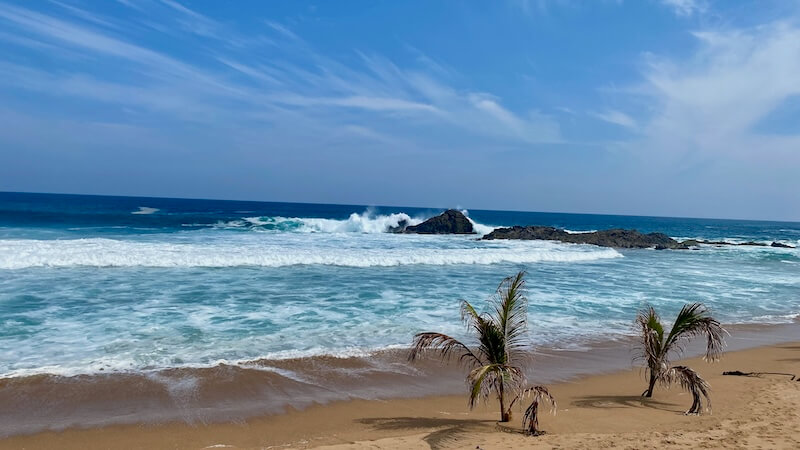
The coast of Oaxaca is wild, magical, and untamable. It is not the stereotypical Mexican beach you see in pictures of Cancun and Tulum. But when the waves rise and curl, they are a beautiful deep hue of bright turquoise. It is rustic, raw, and full of character. The sea is too tumultuous to swim much of the time, the sunsets are spectacular, and despite the growing tourism, there are still places where you can find solitude, especially during the summer months when most people can’t handle the oppressive tropical heat.
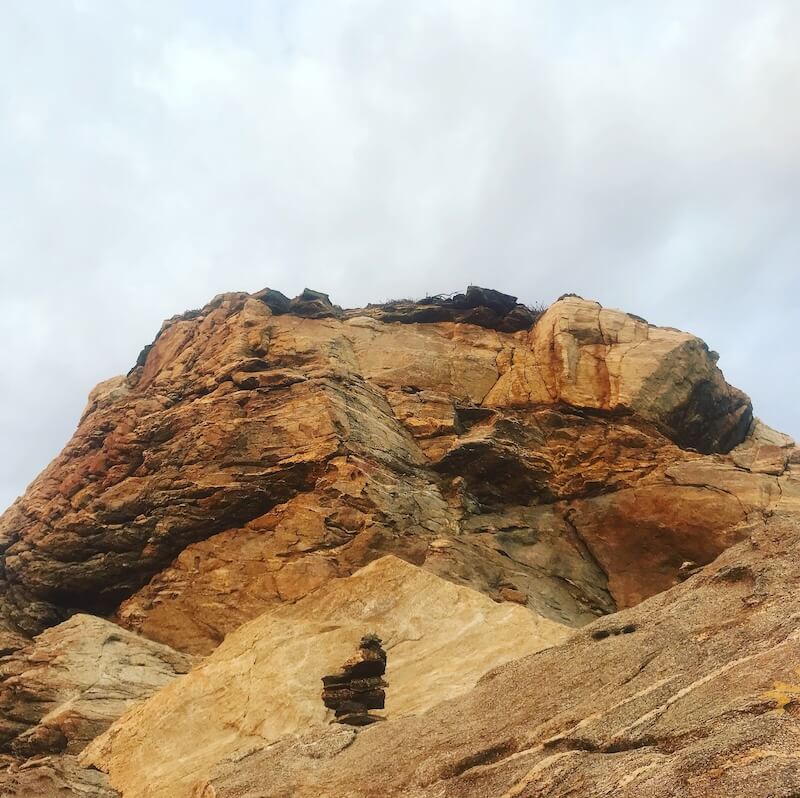
The individual beaches and towns that make up this stretch of the Oaxaca coast are set apart by cliffs of metamorphic rock that formed millions of years ago. These outcroppings are majestic and often provide a beautiful backdrop for sunbathing. They also rise out of the water to form smaller bays that are safer for swimming.
I have a long history here. I once lived in Puerto Escondido, and even after moving to Oaxaca City, I continued returning for weeks or months at a time. So I knew that returning after several years to the Oaxaca coast for a self-made retreat was exactly what I needed to reconnect with the spirit and energy of a part of Mexico I know and love.
My goal was to make time for myself—to clear my mind and think about my life. I recently felt pulled in a slightly different direction (this blog is part of that), and I needed space and solitude.
I don’t have trouble relaxing. In fact, I live a slow and fairly uneventful life. But traveling while working presents constant practical challenges. Finding reliable internet and a proper table to work at is harder than you might think. Electricity outages are common. Grocery shopping and cooking take time. There are visas and flights, and every move requires adjusting to a new place.
I was tired.
Why I Prefer to Create My Own Retreats
The idea of spending money on a retreat has never appealed to me. I believe anyone can create their own retreat rather than buy one. It takes more work on your part, but not necessarily more money.
I am also not a fan of the modern wellness industry and the accompanying rise of performative spirituality. It’s a machine that creates problems so it can market and sell solutions, and it feeds on much of the spiritual bypassing happening in trendy “spiritual” communities around the globe.
Why go on a silent retreat when you can simply go away from the world on your own to sit in silence?
I believe that becoming more grounded and self-aware is mostly quiet work that happens over time, often on your own, with the guidance of dedicated and knowledgeable teachers when needed.
For me, creating my own retreat does not require an itinerary, workshops, or a carefully curated schedule. It is much simpler. It is creating the conditions that allow me to slow down, spend time in nature, and return to my own rhythms.
Designing My Own Retreat
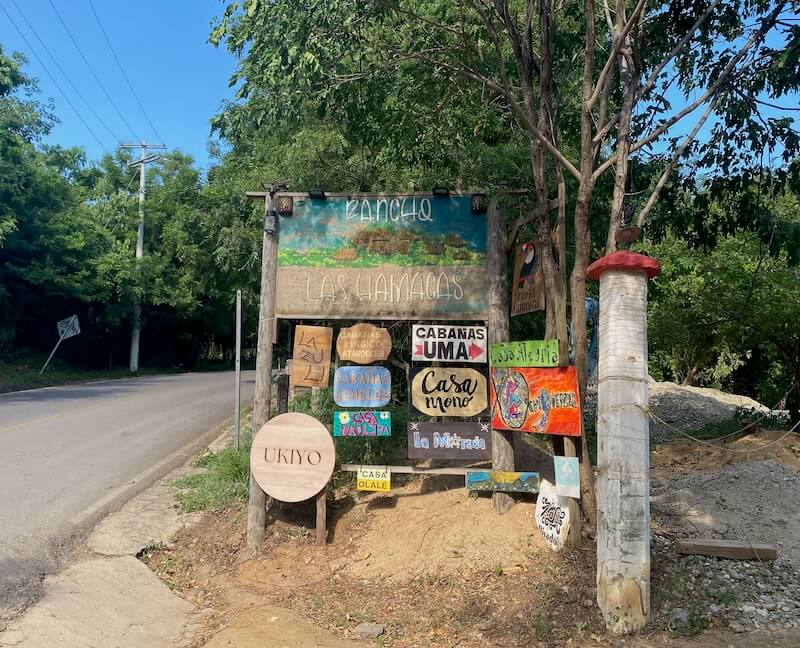
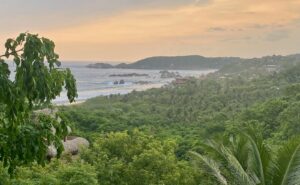
I had explored many of the different beach towns over the years, but I ultimately chose the sleepy town of San Agustinillo for my DIY retreat. I chose to rent a small bungalow-style apartment in an area known as Rancho Las Hamacas, a quiet hillside neighborhood about a fifteen-minute walk past town on the way to Zipolite. It’s filled with guest houses and homes that are more private than other areas. The main draw is the stunning view of the Pacific. In the past, I have even watched whales from my hammock in the palapa. It’s a privileged spot that most tourists either don’t know about or choose to pass by in favor of beachfront cabanas and easy access to restaurants.
I decided to splurge on a bungalow tucked into the hillside. Since I had stayed there before, I knew it had everything I needed: privacy, a kitchen, a hammock, a view of the ocean, and an easy walk to both the beach and town. In fact, there was a direct dirt path to the beach from my bungalow. I didn’t need restaurants, nightlife, or activities. My favorite traveling companion—my JBL speaker—was entertainment enough.
After years of traveling, one of the best tips I can give for saving money on accommodation is to rent directly from the owner, and that’s what I did for this trip. It was low season, so I was able to negotiate a good price. In Mexico, Airbnb fees and taxes on rental properties have become quite high, and owners are often happy to avoid them. When I’m traveling and I know it’s a place I’ll probably return to, I always explore rentals for future stays. It gives me the chance to see places in person and know whether they’re a good fit for my lifestyle.
Living the Retreat
In yoga we talk about sadhana. A sadhana is essentially a disciplined daily routine that guides a practitioner toward the ultimate goal of self-realization. Every person’s sadhana looks different—it can include asana, pranayama, and meditation. But it is also how and what you eat, getting proper sleep, who you choose to spend your time with, and performing your daily tasks with intention.
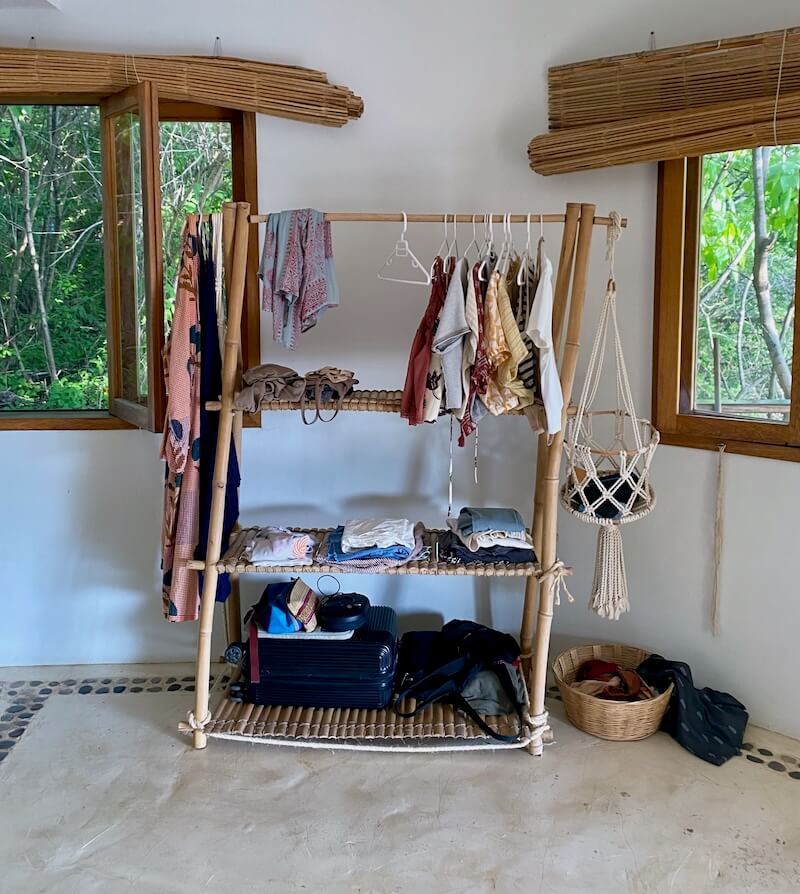
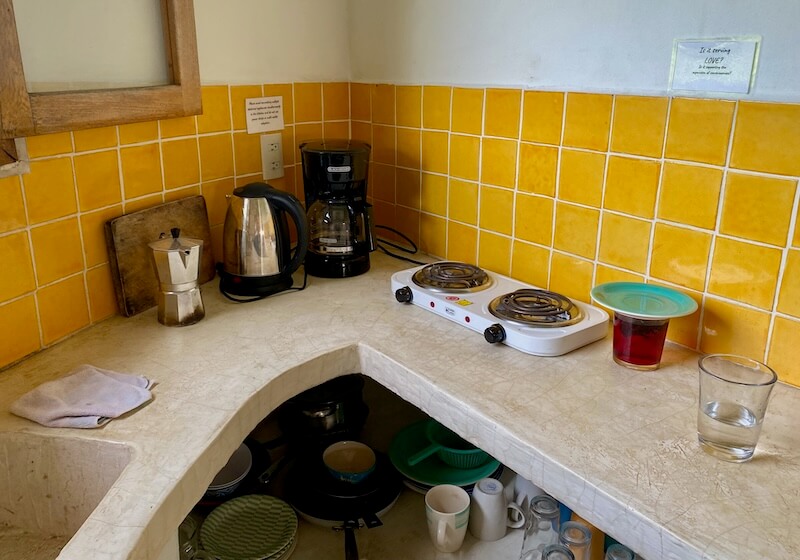
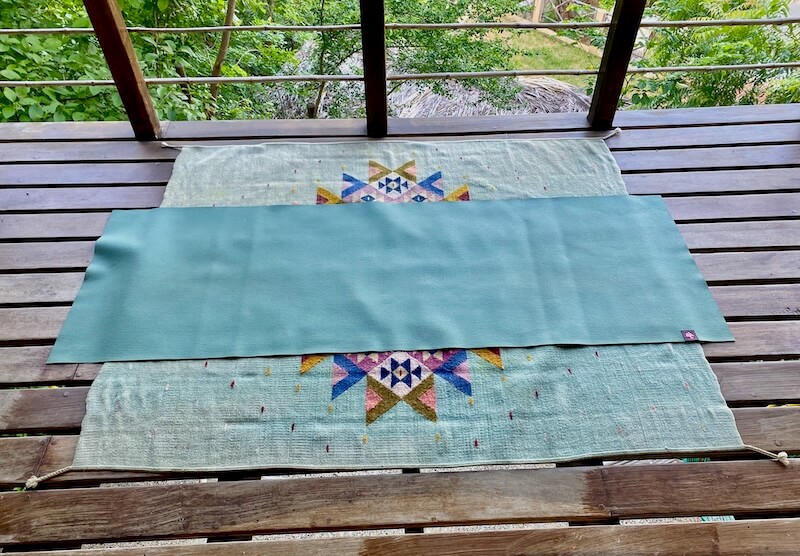
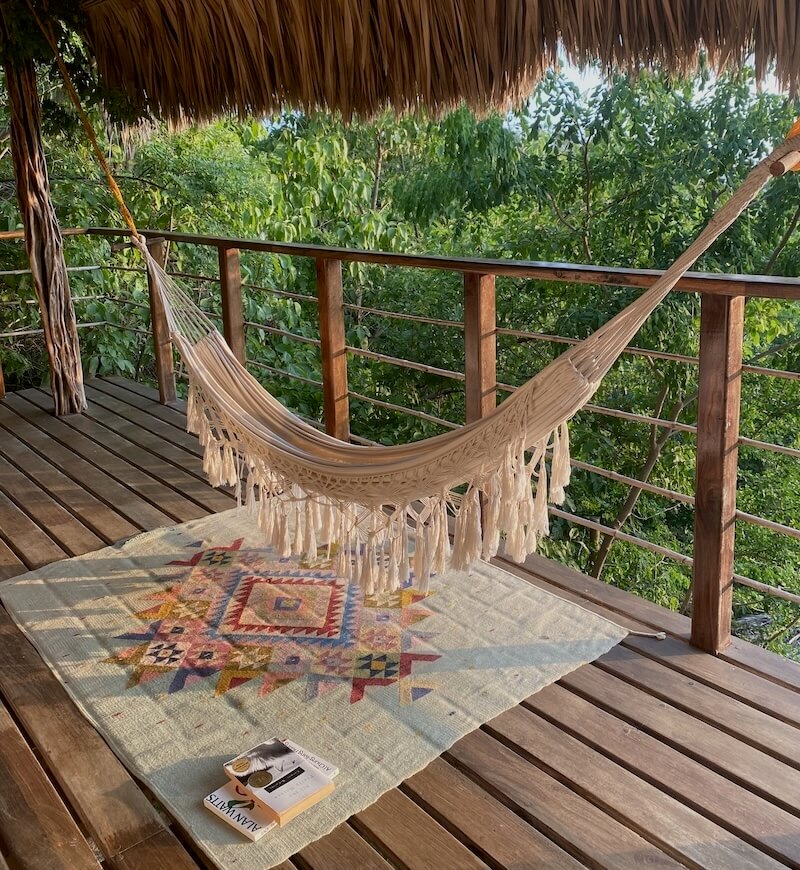
Since I already have an established sadhana, my daily routine during my personal retreat wasn’t much different from my routine anywhere else. What I paid extra for was the privilege of being surrounded by extraordinary natural beauty. The space was thoughtfully designed. It was decorated with handmade Mexican touches like a woven rug (perfect for yoga), colorful throw pillows, and a comfortable bed, all while remaining very simple. The retreat wasn’t about changing my life. It was about creating the space to practice the slow living that already matters to me.
Every morning I woke up surrounded by green trees and the grey dawn. Part of my sadhana, no matter where I am, is lighting incense and reciting a simple morning mantra. Here was no different. After that I would make a cup of tea and carry it out to the hammock overlooking the Pacific. The only sounds were the crashing waves below and the birds waking up in the trees around me. The air was already warm and heavy with salty humidity, and the sea was alive, as it always is. This quiet ritual lasted only fifteen or twenty minutes, but it reminded me why I came here.
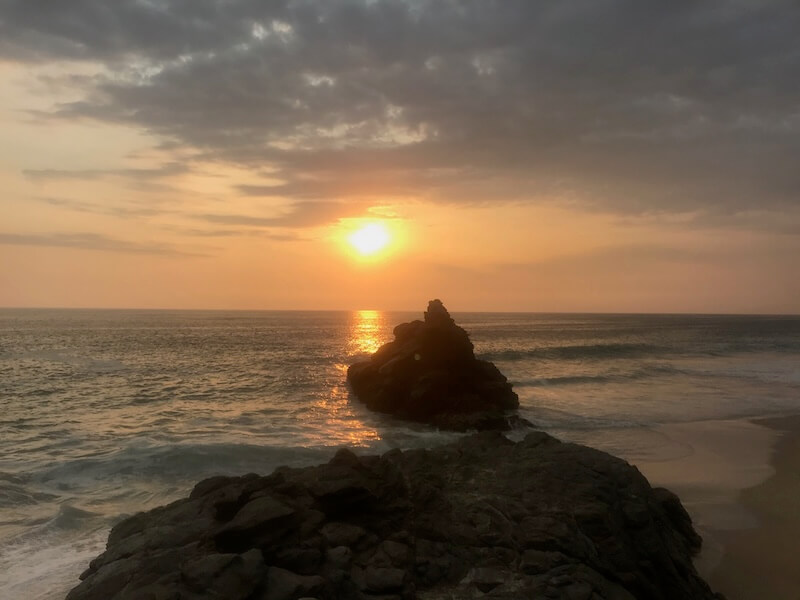
After my morning asana practice and a short meditation, I would usually go for a long walk on the beach. The end of the beach where I was staying is backed by tropical green jungle dotted with rooftop palapas. There is a large outcrop of cliffs and other rocks that protrude from the ocean like prehistoric dinosaurs. Sometimes I would place my palms on the hot rocks and imagine I was soaking up the energy and knowledge of millions of years past. You can truly feel the power of nature here.
This area of the beach has no beachfront properties or restaurants with sunbeds. It’s an open, rustic beach where you are often alone. On days when the sea was calm, it was possible to swim. Otherwise, I would continue down the beach to a beautiful bay full of tourists eating seafood, drinking beers, and listening to Mexican guitar music beneath colorful umbrellas.
Several times a week I walked into town to buy fruits and vegetables. A truck arrived every Wednesday and Saturday with fresh produce and herbs, some I had never heard of, even after living in Oaxaca for quite a while. One of my favorite family-owned shops also sold vegetables and other essentials like yogurt and fresh coconuts. I bought a brick of piloncillo, an unrefined Mexican cane sugar, unlike any I had seen before. It was deep brown, almost black. I used it to make a syrup that I added to my agua de jamaica, a common Mexican water made with dried hibiscus buds or to add to a refreshing drink of water and fresh lime. (See my simple piloncillo syrup recipe in From the Market.)
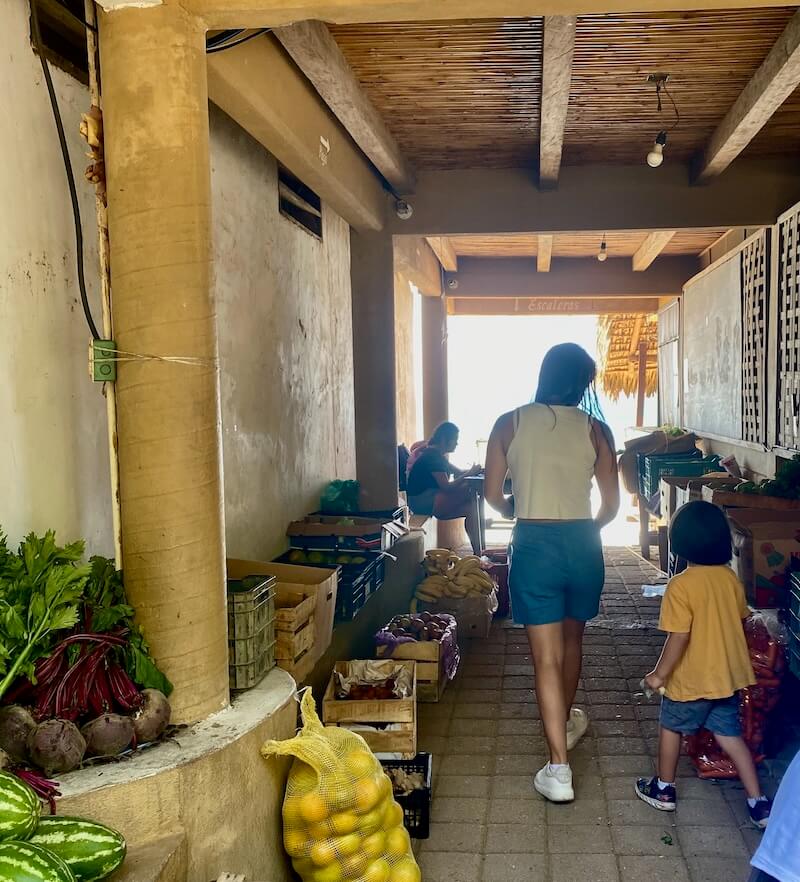
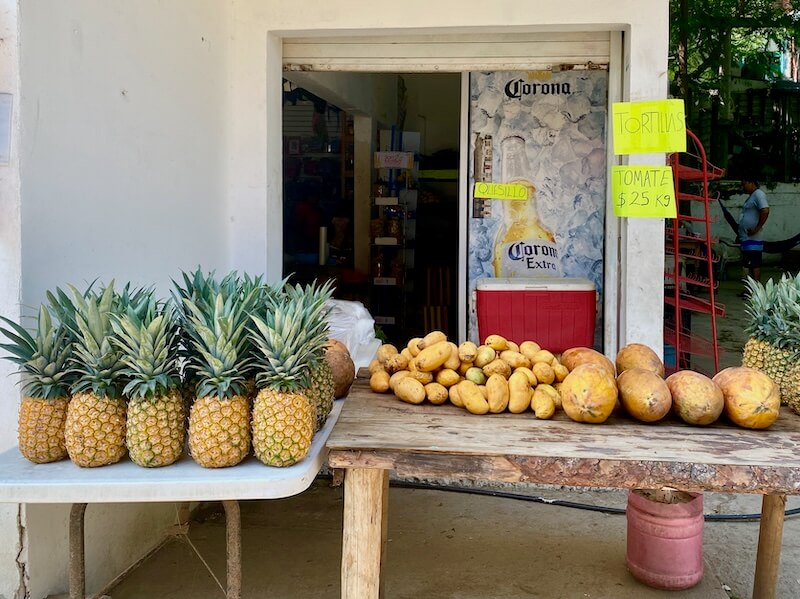
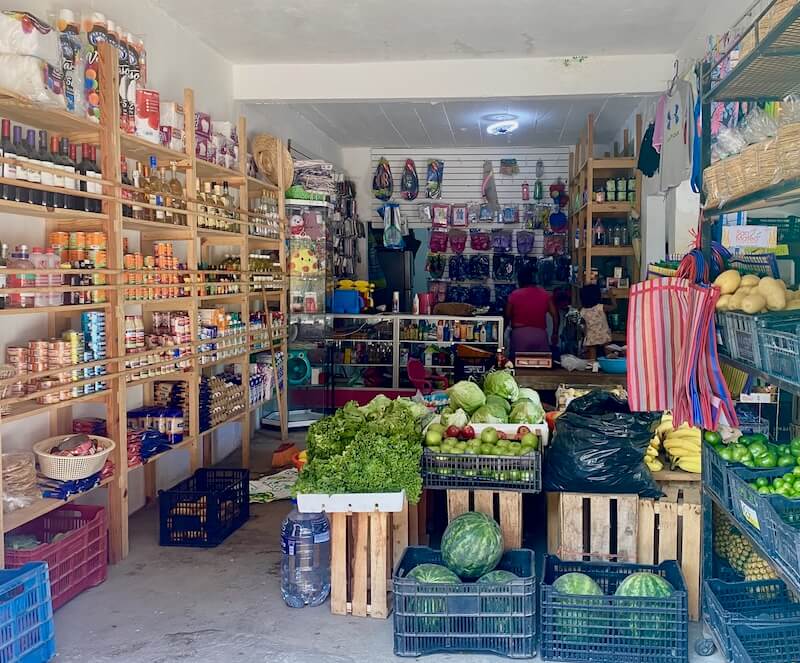
The other shops in town allowed me to scrape together the basics—cheese, beans, butter, and pasta—but not much beyond that. For things like tahini, lentils, oats, and brown rice, I walked to neighboring Mazunte, a Pueblo Mágico that has evolved from a quiet backpacker destination into one of the coast’s most popular towns. There are a couple of small organic shops there that sell the usual traveler staples like natural soaps, oils, and other pantry items.
About once a week, I ate breakfast at the same little café overlooking the ocean in San Agustinillo. It had only a handful of tables, all of which filled quickly each morning. Local musicians stopped by with their wooden guitars to play traditional songs while people lingered over coffee and the generous breakfasts Mexico is famous for.
The walk into town took about fifteen minutes—all downhill.
Coming home with groceries under the blazing afternoon sun was another story.
The heat was relentless, but I welcomed the exercise. There were taxis and collectivos, but I always chose to walk. A simple life requires discipline, and spending more on accommodation meant making compromises elsewhere.
Some days I spoke to no one.
I read All the Pretty Horses by Cormac McCarthy and a book on Tao by Alan Watts. I cooked simple meals—ratatouille, tostadas with avocado, queso, and hot sauce, and different versions of a simple vegetable soup. I spent long stretches of time doing very little besides watching the ocean, listening to the birds, and walking around in my underwear sweating in the tropical heat.
There was no schedule to follow and nowhere I needed to be.
What a Retreat Really Means to Me
People often imagine a retreat as something you purchase—a carefully planned experience with teachers, classes, and workshops. But for me, it is something much different. It is choosing a place where I can live as simply as possible. It is following my own rhythm instead of someone else’s. It’s about creating my own space for silence and thought.
For me, slow living isn’t about doing less for the sake of it. It’s about making room for the things that matter most. These are the things I consider to be luxuries in life: the freedom to arrange my schedule so that I have mornings free to be quiet and alone, to drink my tea while watching the birds and the trees.
I have made the conscious choice to live with less and have more time than money. Some people can’t understand my life, and some people admire it. For me, it’s a life I built somewhat consciously, but also by simply following my desires, figuring out a way to stay afloat, and making it up as I go.
After a month on the coast, I didn’t come away feeling transformed.
I came away feeling like myself again.
I spent many afternoons lying in my hammock, overwhelmed by the beauty surrounding me and filled with a deep sense of gratitude—for Mexico, for nature, and for the circumstances that allowed me to spend a month living so simply.
In the evenings I would sit in my hammock listening to distant drumming as the sun went down. I watched the trees swaying in the wind and was reminded of something I have always known to be true: there is a higher power. Creating my own retreat on the Oaxaca coast simply gave me the space to reconnect with it.
From the Market
Piloncillo Syrup From the Oaxaca Coast
This recipe was inspired by a small brick of piloncillo I found during my month on the Oaxaca coast. I wrote more about my self-made retreat in San Agustinillo here.
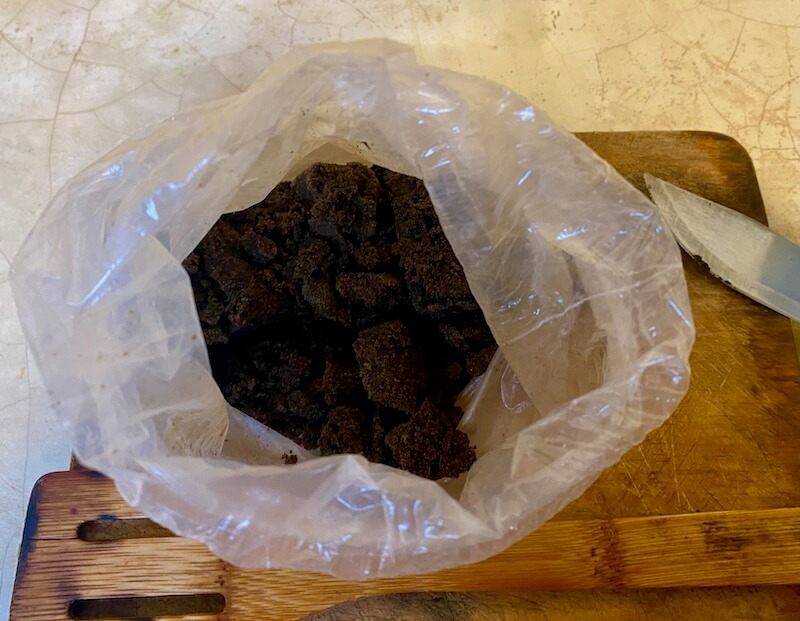
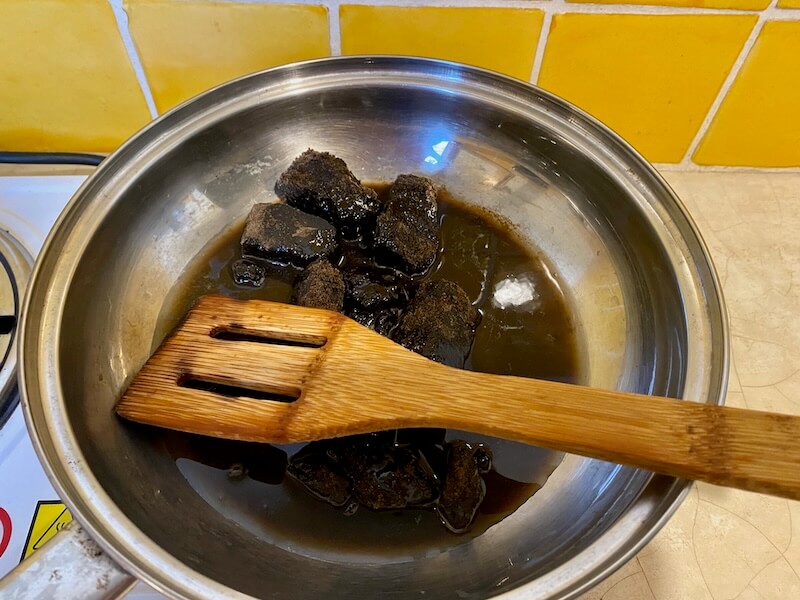
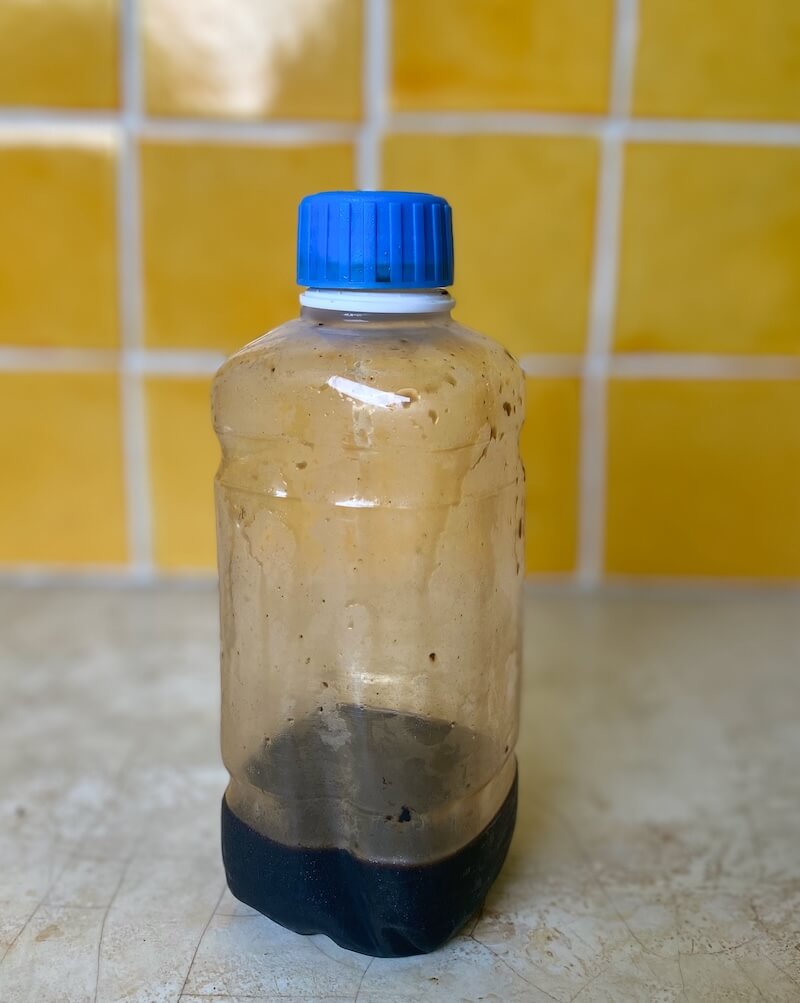
One of my favorite discoveries during this month wasn’t a restaurant or a beach—it was a dark brick of piloncillo I bought from a small family-owned shop in San Agustinillo. It was much darker and richer than the piloncillo I usually find in Oaxaca City, and I couldn’t resist bringing one home.
For me, these little local discoveries end up becoming part of my daily routine in the places I live. It’s a way for me to feel connected to the culture.
To make the syrup you first need to break it up in the bag. Sometimes I use my neighbors hammer or a rock, but this particular kind was pretty soft so I just slammed it on the counter a few times and broke the rest apart by hand.
I rarely measure ingredients, but a general ratio is about one part piloncillo to one part water. You can add more water as you go according to your preference. Simmer gently on very low heat until the sugar dissolves, then let it cool before storing it in a jar in the refrigerator
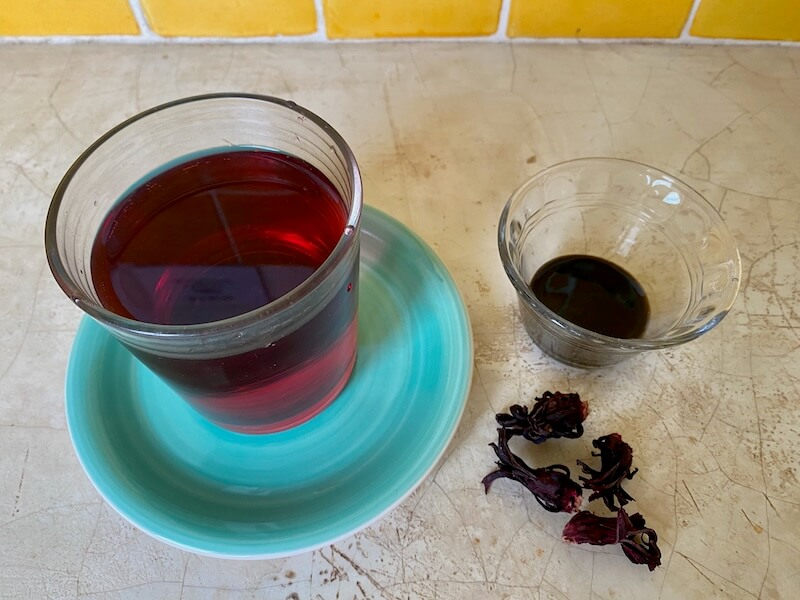
I kept it in the refrigerator and added a splash to agua de jamaica, sparkling water with fresh lime, or even my morning tea. I also use the dry powder in my morning oats.