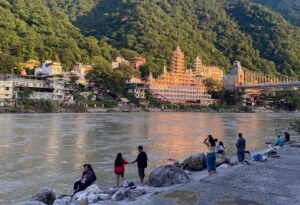
Rishikesh is known as the “Yoga Capital of the World.” My first visit here was four years ago, after I became more curious about yoga and serious about my practice. Since then, I have been returning yearly to deepen my practice and enjoy the buzzing atmosphere of a holy city on the Ganga.
And it’s REALLY buzzing.
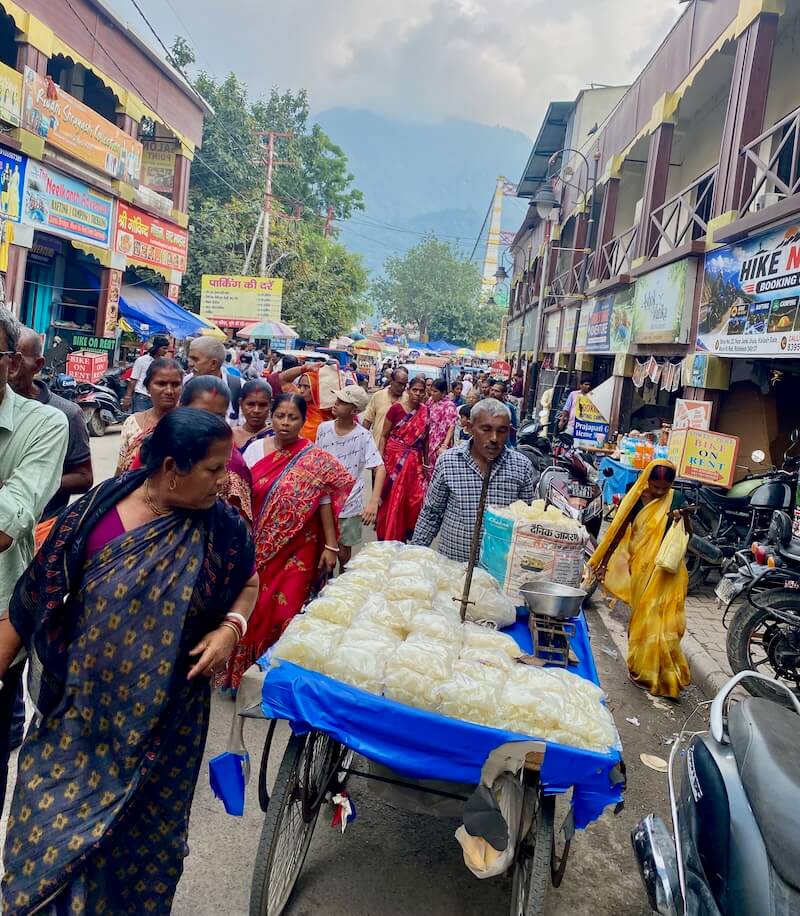
There is little silence to be found outside of your accommodation (and then only if you know where to stay). It’s not a complete attack on your senses like Delhi or Varanasi, but there is the ever-present sound of motorbikes and cars honking their horns for no apparent reason, large groups of extended families making pilgrimages to one of the many auspicious and famous temples, and cows blocking your way as you try to navigate through the picture-taking crowds on Ram Jhula or Laxman Jhula Bridge.
Rishikesh has changed quite a bit since my first visit. It has become a hotspot, not only for yoga students from all over the world, but for Indians as well. In fact, these days it feels like there are fewer foreigners than Indian tourists. There has been an immense increase in traffic, which only adds to the noise and pollution that people come here to escape.
The Upper Tapovan area is popular with young Indians who come here for a more international “scene.” Like foreigners, they sit in cafes with their laptops and phones, couples come for getaways together, and groups of friends arrange parties in hotels and Airbnbs. Many seem to have little interest in yoga or spirituality.
I notice these changes more now because I have something to compare them to. When you return to a place, you start noticing things you probably wouldn’t see on a first visit. You recognize people on the street, notice which shops have opened or closed, see how the neighborhood has changed, and start to have your own little routines.
Returning to a Familiar Place
When I return to Rishikesh, it always warms my heart to be greeted with a “namaste ji” by the cafe staff and shop owners who recognize me from year to year. This year, the owner of my favorite shop in Rishikesh (or possibly in the world!) gifted me a package of my favorite ginger cookies.
Despite all of the recent changes, I keep returning to Rishikesh to practice yoga with my regular teachers. I know I have arrived “home” when I walk into my yoga shala and see some of the familiar faces who, like me, return year after year. The question “When did you come back?” is a common one. You can read more about my perspective and specific experiences with yoga in Rishikesh here.
But returning isn’t only about the things I do every year. It’s also about the little things that now feel familiar. The first time I came to Rishikesh, everything was new. I was discovering the neighborhoods, figuring out where to eat, finding my way around, and trying to take in as much as possible.
Now I don’t feel the same need to explore.
I already know where I want to go and what my days will look like. I’m not running around sightseeing or trying new cafes. I walk the same streets, see the same people, and eat the same food every day. And I think that’s one of the reasons I keep coming back.
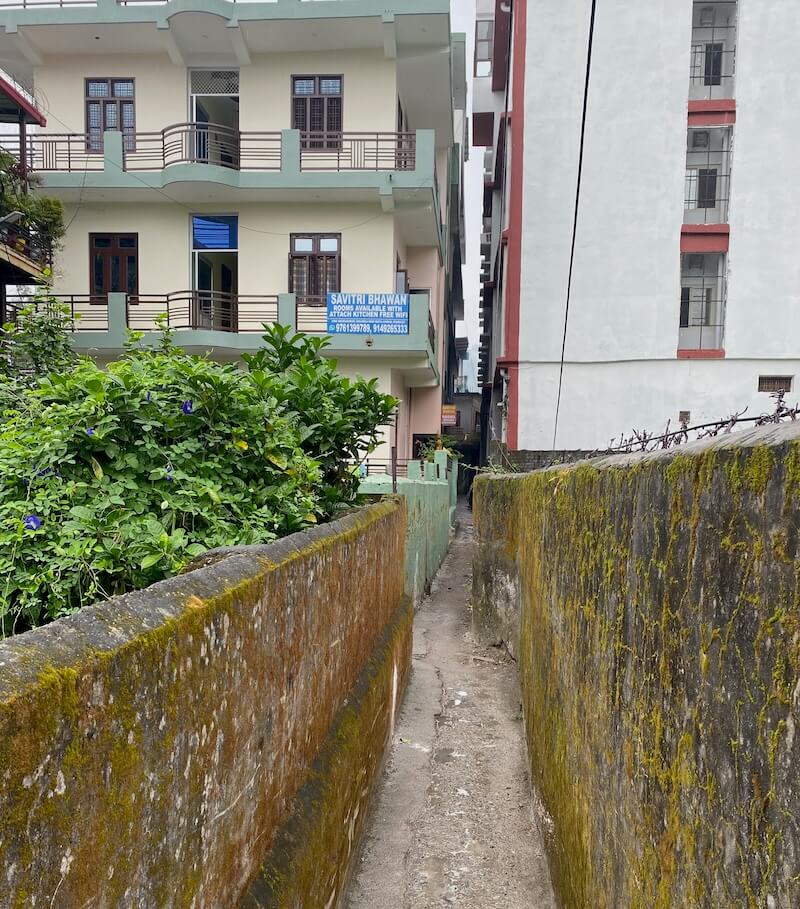
I choose where I stay carefully. Since I’m already familiar with the city, I know what I need to be happy in my daily life here: silence and convenience.
This year I rented a room in a building right next to my yoga shala in an area called Swarg Ashram. Specifically, there is a smaller pocket called Jonk Village that is tucked back behind all the action on the main streets and the Ganga. Jonk is a series of small streets and alleys only accessible to two-wheelers. This keeps it much quieter than other locations.
One of the first things I do after arriving in Rishikesh is attend the evening aarti on the banks of the Ganga.
It’s loud, full of life and energy, and something I always enjoy experiencing when I return. Most importantly, the crowds, the chanting, and the offerings bring me back to my center and help me connect to the culture and remember the power of nature. The event allows me to ground in the moment and brings me home to my spirituality.
The Comfort of Everyday Rituals
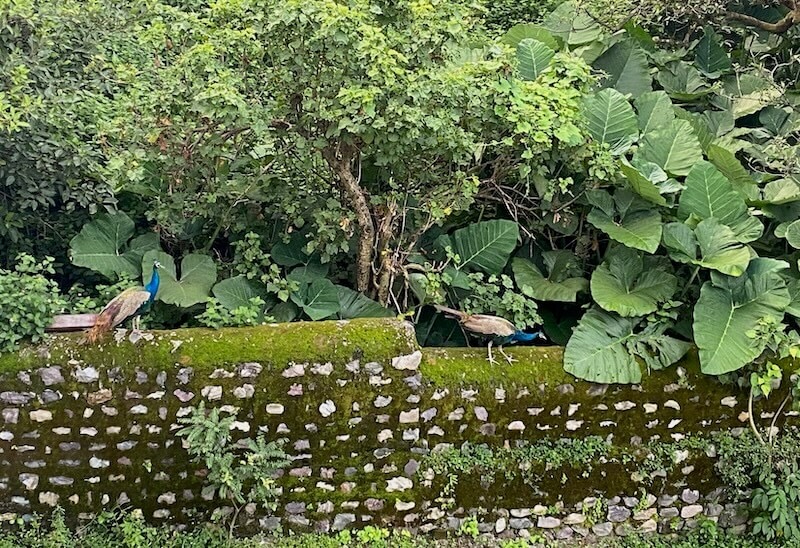
My days here are very simple and slow. My morning routine begins with a cup of warm water with ghee while I watch the peacocks roaming around below my balcony.
Yes….peacocks!!
The rooftop is my morning meditation spot. There is a beautiful green view of the neighbors’ gardens, with the mountains on the other side of the river as a backdrop. After a short meditation and pranayama, I make a cup of tea in my room and go back up to the roof to sit in the sun for a while before my yoga class.
Rooftops are often accessible in India, and I always use them. They serve as a kind of private park. It’s a space to walk, sit quietly with a tea, watch the sunrise or sunset, hang laundry to dry, do yoga, or watch the monkeys. From my rooftop, I see the same people every day on their rooftops. I watch the family I rent from in their home below as they lovingly tend to their cow or take baths using the outdoor tap.
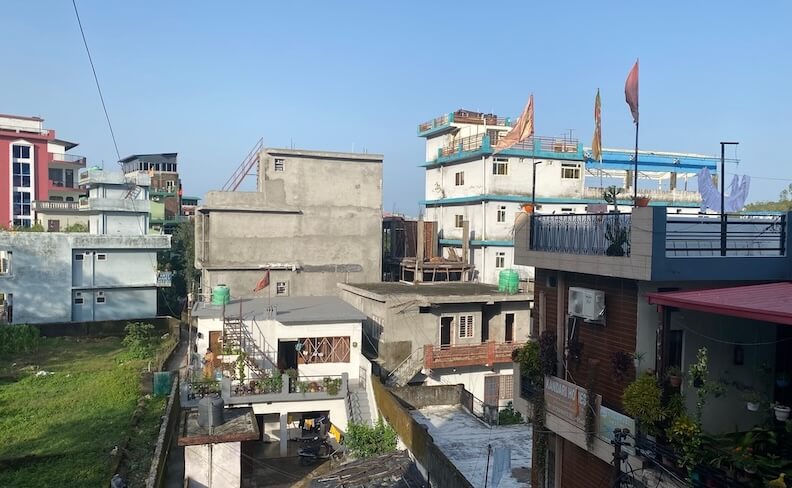
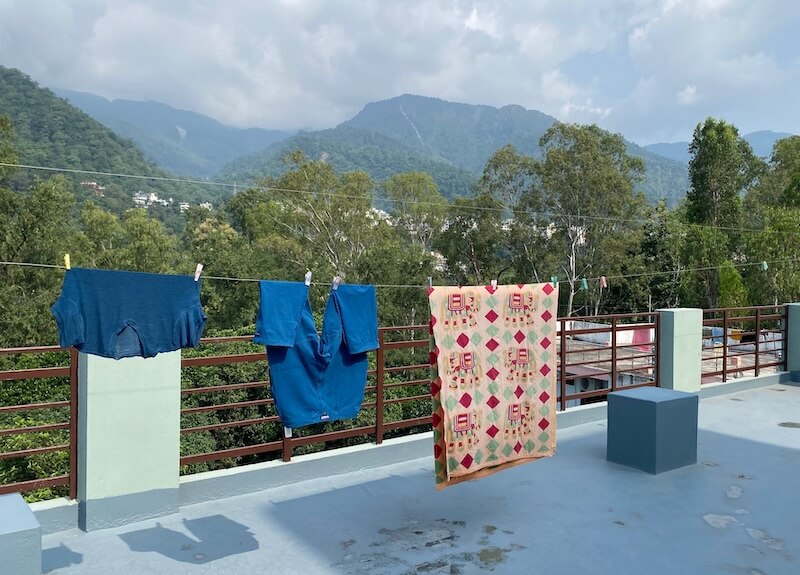
These moments are special to me and help me feel connected to my neighbors. You can learn a lot by watching what’s going on from the rooftops. Noticing my surroundings and watching people live their daily lives is why I choose the slow travel lifestyle. I’m not in a rush to see as much as I can before I leave in a few days. I can immerse myself in all the small details that make up life. Watching the locals is how I learned to chase the monkeys off my balcony with a bamboo stick!
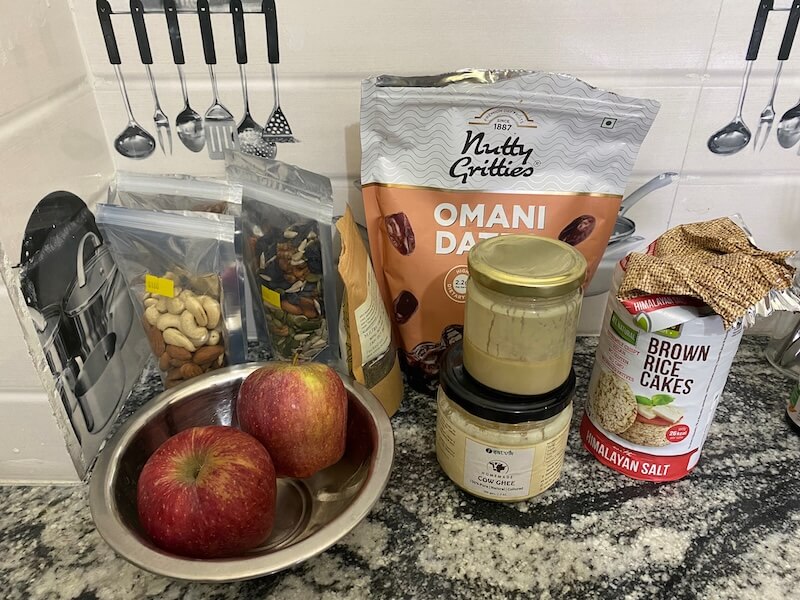
My morning yoga classes are at least two hours (sometimes longer), so by the time I go home to change clothes and go to lunch, it’s already late morning. Since I don’t have a functional kitchen, I don’t need to shop for a lot of food, but I do keep snacks like nuts, rice cakes, tahini, and fruit for small meals. I eat a lot of rice cakes when I’m in India!
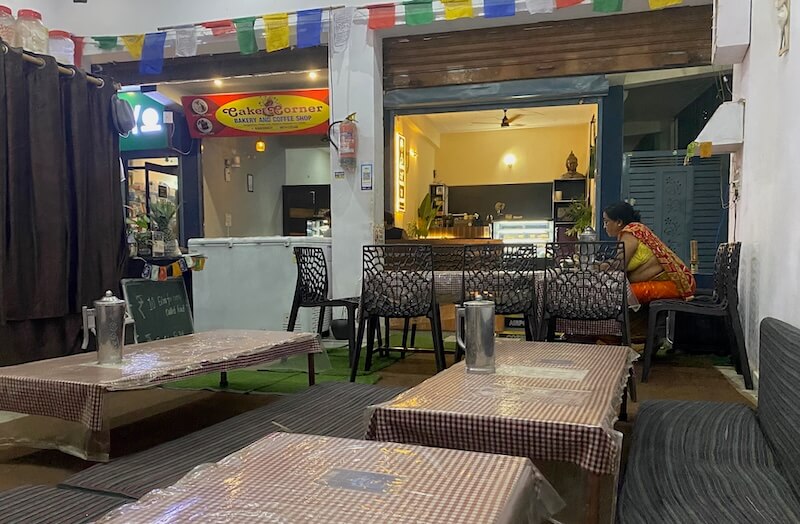
Afternoons are hot, and after lunch I’m often tired, so I sometimes take a short nap. Then I work for a few hours until early evening, and then it’s time for dinner. I have a handful of restaurants I frequent.
One of the many things I love about India is that it’s never a problem finding something vegetarian (or even vegan) to eat. And since Rishikesh is a holy city with many yoga practitioners and teachers, you can also find healthy sattvic food—pure vegetarian food with mild spices, minimal oil, and fresh, simple ingredients. I often eat a sattvic thali for dinner at one of my regular places.
Knowing Your Way Home
When you first visit somewhere, there is always a feeling that you might miss something. But after four visits to Rishikesh, I don’t feel any pressure to see the most famous temple or find the best restaurant, or walk down
every interesting street and experience as much as possible.
I know where to find silence.
I know where to go when I want to be around people.
I know where to sit by the Ganga in the evening.
I know which way to walk home.
Rishikesh isn’t the same place it was when I first came here. And I’m not the same person either. But there is something comforting about returning to a place that you already know.
For me, Rishikesh has become less about seeing a new place and more about returning to a familiar one—and settling back into a life that feels like my own.